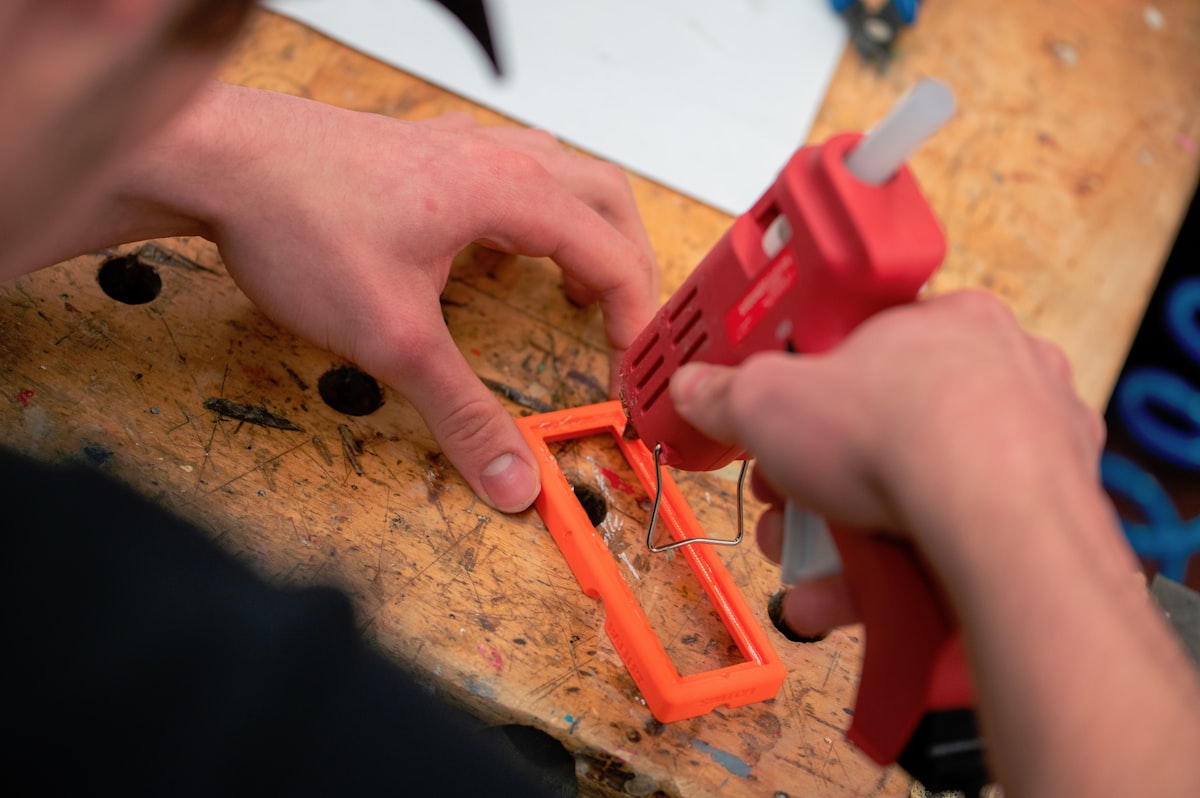
How to Use a Hot Glue Gun: UK Beginner's Guide
Key Takeaways - Quick Summary
- Best overall: Tilswall 50W Hot Glue Gun Kit heats in 60 seconds and ships with 75 glue sticks
- Best for crafting: RUNSAI 30W Hot Glue Gun has an anti-drip nozzle for clean lines
- Best cordless: Bosch GluePen gives precision tip control for fiddly work
- Best budget: Amazon Basics 20W Glue Gun Kit does the job for under a tenner
- Rule one: always use the right glue stick size for your gun (7mm or 12mm)
Suggested reading: see our full best hot glue guns roundup, where we compared 7 models.
A hot glue gun is the cheapest tool that changes how you make things. It bonds wood, card, fabric, plastic, and glass in seconds, it's forgiving when you mess up, and a decent one costs less than a takeaway. The catch is that most beginners pick one up, squeeze the trigger, and end up with a stringy mess and a burnt finger before they learn the two or three habits that make it behave.
This guide covers the practical side. You'll learn how to choose a gun, which glue sticks to feed it, how to lay a clean bead instead of a blob, and how to fix the common failures that put people off. If you'd rather skip straight to shopping, our best glue guns roundup has the full comparison, but read on for the technique that makes any of them work properly.
What You Need Before You Start
You don't need a fancy setup. A glue gun, a pack of sticks, and a heat-proof surface cover 95% of craft and repair jobs, so here's what each piece does and why it earns its place.
The Gun
Glue guns are rated by wattage, and wattage controls heat-up time more than anything else. A 20W Amazon Basics gun takes around 4 minutes to get ready and suits light card, paper, and fabric work. A 50W Tilswall is ready in about a minute and melts glue faster than you can apply it, which makes it better for wood, heavier materials, and longer sessions. For most UK makers who craft more than once a month, 30-50W is the sweet spot.
The Sticks
Sticks come in two diameters: 7mm and 12mm. Most craft guns take 7mm sticks, and most hardware-store glue guns take 12mm. Never force the wrong size in - it jams the feed mechanism and you'll spend an evening fighting it. Standard clear sticks are fine for almost everything. White opaque sticks dry faster and grab better on wood, while coloured and glitter sticks exist purely for decoration on visible seams.
The Work Surface
Hot glue drips. It also lands on your table, your jeans, and your cat if you're not careful. Cover your work area with baking paper or a silicone mat, and keep a cup of cold water nearby. Dipping a glue-covered nozzle in cold water stops the flow instantly, and it's the fastest way to clean the tip between colours.
How to Use a Hot Glue Gun: Step by Step
Once you know the sequence, a glue gun becomes a one-hand tool you reach for without thinking. Here's the order that works every time.
Step 1: Warm It Up Properly
Plug the gun in and stand it on its built-in stand or lay it on its side with the nozzle pointing down over the edge of your work surface. Wait until glue flows freely from the nozzle when you squeeze - a thin, steady stream means it's ready.
If the glue comes out in stiff little worms, it's not hot enough, and using it cold is the number one cause of weak bonds and stringing. The RUNSAI 30W has an indicator light that makes this easy to judge.
Step 2: Load the Stick
Push a 7mm stick into the hole at the back until it stops. Keep a second stick pushed in partway so you can feed the next one without fumbling mid-project. The stick is pulled forward by the internal mechanism as the glue melts, so you should never need to shove it hard - if it won't go, it's the wrong size or there's a jam.
Step 3: Apply in Short Squeezes
Squeeze the trigger in short, controlled pulses rather than one long press. A blob of glue takes longer to set and spreads where you don't want it. For most joins you want a bead about the width of a pencil lead, laid along the surface you're gluing to, not the piece you're holding. Press the two parts together within 5 seconds and hold for 15-30 seconds while the glue sets.
Step 4: Clean the Nozzle Between Jobs
Wipe the nozzle on a scrap of card or paper towel while it's hot. Never touch the metal nozzle with bare fingers - it sits at 190-200°C and the burn is immediate. If glue has built up and gone brown, heat the gun, wipe the worst off, and dip the tip in cold water to solidify anything left.
Glue Gun Techniques That Actually Matter
Three techniques separate a clean join from a stringy disaster. Learn them once and every project gets easier.
Dot and Line Placement
For small parts like beads, buttons, or magnets, apply a dot the size of a pea rather than a line. For anything longer than a few centimetres, run a continuous bead and press along the whole length. Pressing one end first traps air and creates a weak spot in the middle of the bond.
Work in Small Batches
Hot glue sets in 30-60 seconds, so plan joins in batches of five or six. Lay beads on several pieces, then press them all together in sequence. You get more consistent pressure and the glue doesn't skin over while you fiddle with the first join.
Use the Wipe-and-Press for Fabric
Fabric soaks up hot glue and can leave a hard lump on the front. Apply a thin line, wait two seconds for it to tack up slightly, then press with a scrap of cloth between your fingers and the glue. The cloth protects your skin and evens out the pressure so the glue soaks into the weave instead of sitting on top.
Common Problems and How to Fix Them
Every beginner hits the same four issues. Here's what's happening and how to stop it.
Stringing Everywhere
Long, thin strands of glue follow the nozzle everywhere. That's glue that's too hot or too thin. Turn the temperature down if your gun has a dial, or use a higher-viscosity glue stick (the packaging says "multi-temp" or "high-tack"). Pulling the nozzle away slowly and twisting as you lift also snaps the string cleanly instead of dragging it.
The Bond Keeps Failing
Hot glue sticks to most things but not to grease, dust, or silicone-coated surfaces. Wipe both surfaces with a dry cloth and, for shiny plastics, rough them up with sandpaper first. And don't rush the hold - 15 seconds of firm pressure beats 5 seconds of gentle pressure every time.
Glue Won't Flow
Usually a cold gun or a jam. Check the stick is the right diameter and not stuck halfway down the barrel. If the nozzle is clogged with old glue, heat the gun for a few minutes then push a thin wire or pin through the tip while the glue is molten.
Burns and Blobs
Glue guns are hot and they drip. Keep the gun in its stand when not in use, never point it at your other hand, and always work over the mat. If you do get glue on skin, don't pull it off - run it under cold water for a couple of minutes and the glue peels away safely.
Which Glue Gun Should You Buy?
If you mainly do craft projects at a desk, the RUNSAI 30W is the balanced pick: it heats fast, its anti-drip nozzle keeps lines clean, and it comes with 30 sticks so you're ready on day one. For heavier work, wood projects, and repairs around the house, step up to the Tilswall 50W - the extra wattage means the glue stays molten longer and you get stronger, more even bonds.
If you hate cables and do small jobs away from a socket, the Tilswall 4V cordless is genuinely useful - it heats in 30 seconds, charges over USB-C, and has a child-safe nozzle, which makes it a sensible first gun if kids are around. For precision work like model making, the Bosch GluePen has a fine tip that lays glue exactly where you point it, though you pay for that control.
On a tight budget, the Amazon Basics 20W kit is perfectly workable for paper, card, and light fabric. It just takes longer to heat and needs more patience on bigger joins. Our full best glue guns roundup compares all seven of these side by side with prices.
Frequently Asked Questions About Hot Glue Guns
Final Verdict
A hot glue gun is one of those tools that looks simple and rewards a little technique. Warm it fully, feed it the right sticks, apply in short squeezes, and press and hold for 15 seconds, and it'll bond more materials than any other adhesive in your drawer.
For most UK crafters, the RUNSAI 30W is the best first gun - fast, clean, and cheap. If your projects involve wood, repairs, or anything bigger than a card, go straight to the Tilswall 50W and you won't look back. And if you're still deciding between models, our full glue gun roundup covers every budget.

Sarah Mitchell writes about crafting, DIY and home projects for MakerUK.
As an Amazon Associate we earn from qualifying purchases.
Last reviewed: August 8, 2026 · Evidence-based content · Contains affiliate links